

Life Coach or Therapist?
Wondering whether you need a life coach or a licensed therapist? You're not alone — and the answer matters. This post breaks down the beautiful difference between the two, so you can find the right guide for this season of your life. If you're feeling that quiet pull toward growth and clarity, Wooded Wellness Collective offers a free 30-minute evaluation. Nature-based coaching for women in Northern Michigan — and beyond.
Life Coach or Therapist?
Understanding the difference — and finding the right support for where you are.
If you've ever found yourself standing at a crossroads — wondering whether to call a life coach or seek out a therapist — you're not alone. It's one of the most common questions people ask when they finally decide to invest in their own wellbeing. And honestly? It's a beautiful question, because it means you're already listening to yourself.
Both paths offer profound support. Both can be truly transformative. But they serve different seasons of your life, and understanding the distinction can help you find the right guide for right now.
What is a licensed therapist?
A licensed therapist — whether a psychologist, licensed professional counselor (LPC), or licensed clinical social worker (LCSW) — is a trained mental health professional. They hold advanced degrees, complete supervised clinical hours, and are licensed by the state to diagnose and treat mental health conditions.
Therapy is the right choice when you're navigating:
- Trauma, PTSD, or unresolved past experiences
- Anxiety, depression, or other diagnosed mental health conditions
- Grief or significant loss
- Addiction or disordered eating
- Relationship issues rooted in deep patterns or family of origin wounds
- Any situation where you feel unsafe, in crisis, or unable to function day-to-day
Therapy often looks inward — exploring your history, understanding why you think and feel the way you do, and gently healing what's been wounded. It is clinical care, and it is powerful, necessary, and worthy of zero stigma.
"Therapy heals the roots. Coaching tends the garden of what grows next."
What does a life coach do?
A life coach is a guide for growth. Rather than diagnosing or treating, a coach walks alongside you as you clarify your vision, identify what's been holding you back, and take intentional steps toward the life you actually want to be living.
Coaching is a wonderful fit when you're:
- Feeling stuck, but not in crisis
- Ready to make a big life change — career, relationships, lifestyle
- Craving more clarity, purpose, or direction
- Working toward goals but struggling with accountability or momentum
- Longing for a deeper connection to yourself and your values
- Ready to move forward, but not quite sure how
Unlike therapy, coaching is predominantly present- and future-focused. It asks: Where do you want to go? What's in the way? What would it look like to get there?
Side by side
- Present & future focused
- Goal-setting & accountability
- For growth & clarity
- Not a clinical service
- Collaborative & action-oriented
- Great for feeling "stuck" or ready for change
- Past, present & future
- Healing & clinical treatment
- For mental health conditions
- Licensed & regulated care
- Diagnostic & evidence-based
- Essential for trauma, crisis, or diagnosis
Can I do both?
Absolutely — and many people do. Therapy and coaching are not mutually exclusive. In fact, they can complement each other beautifully. Your therapist tends to the healing; your coach helps you build what comes after. If you're already working with a mental health professional and feel ready to expand into goal-setting and intentional living, coaching can be a wonderful addition.
That said, it's always wise to consult your therapist before adding coaching to your care, especially if you're actively treating a mental health condition.
How do I know which one I need right now?
Here's a gentle way to check in with yourself: Are you in pain that feels rooted in your past, or are you feeling a pull toward something in your future? If it's the former — if there's unhealed trauma, a mental health diagnosis, or a sense of crisis — please reach out to a licensed therapist. There is so much help available, and you deserve it.
But if you're someone who is fundamentally okay — curious, capable, and ready to grow — and you're simply longing for more meaning, more alignment, more you... that might just be the whisper of a coach calling your name.
Ready to take the next step?
If you're feeling that quiet pull toward something more — more clarity, more connection, more intention in your everyday life — Stephanie at Wooded Wellness Collective would love to explore that with you. Schedule a free 30-minute evaluation to discover if nature-based coaching is the right fit for this season of your life.
Book your free 30-minute chatNo pressure, no commitment — just a conversation among the trees.
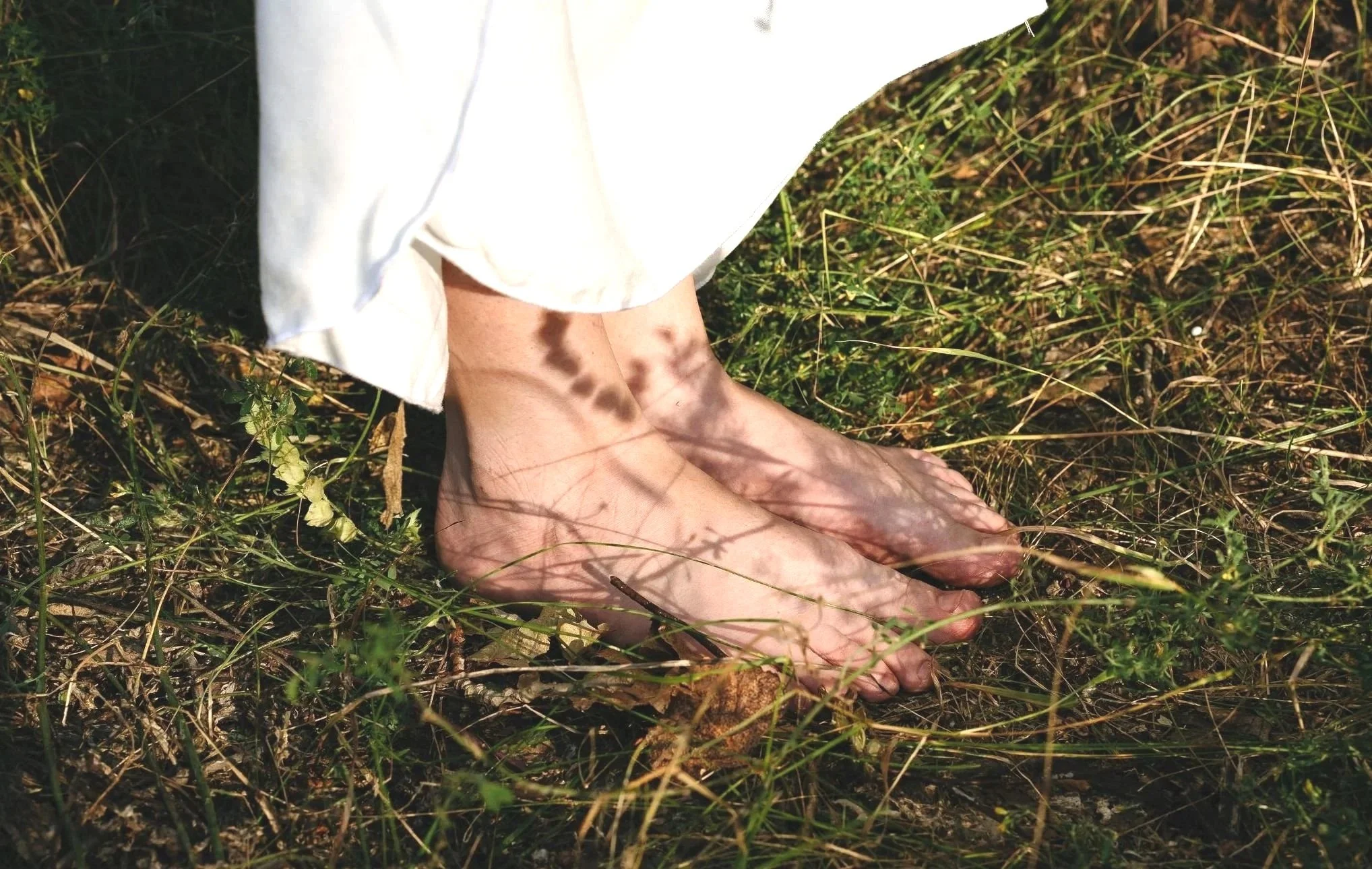
Forest Bathing: From Japan’s Ancient Wisdom to Northern Michigan’s Quiet Trails
If you’ve ever walked through the woods and felt calmer before you even realized it, you’ve already experienced part of what the world now calls forest bathing.
But forest bathing is more than hiking. More than exercise. More than “getting outside.”
It is the intentional practice of slowing down enough to fully experience the forest through your senses — and it has roots that stretch from Japan in the 1980s to wellness retreats, hospitals, parks, and nature programs across the United States today.
If you’ve ever walked through the woods and felt calmer before you even realized it, you’ve already experienced part of what the world now calls forest bathing.
But forest bathing is more than hiking. More than exercise. More than “getting outside.”
It is the intentional practice of slowing down enough to fully experience the forest through your senses — and it has roots that stretch from Japan in the 1980s to wellness retreats, hospitals, parks, and nature programs across the United States today.
The Origins of Forest Bathing in Japan
The term Shinrin-yoku, translated as “forest bathing,” was first introduced in Japan in 1982 by the Japanese Ministry of Agriculture, Forestry, and Fisheries. At the time, Japan was experiencing rapid urbanization, increasing stress levels, and growing concerns about the health effects of modern city life.
The idea was surprisingly simple: people needed nature.
Unlike hiking or trail running, Shinrin-yoku was never intended to be athletic. There was no destination, no mileage goal, and no pressure to “accomplish” anything. Instead, participants were encouraged to move slowly through forests while consciously engaging their senses — noticing the smell of cedar and pine, the sound of wind through leaves, the feel of moss beneath their fingertips, or the shifting light between branches.
In many ways, forest bathing combined ancient cultural respect for nature with modern preventative health practices.
What began as a public wellness initiative soon became something much larger.
The Science Behind Forest Bathing
Over the last several decades, researchers in Japan and around the world have studied how time spent in forests affects the human body and mind.
The findings have been remarkably consistent.
Studies suggest that forest bathing may help lower cortisol levels (the body’s primary stress hormone), reduce blood pressure, improve mood, and support immune system function. Researchers have also explored how exposure to natural compounds released by trees — called phytoncides — may contribute to these benefits.
One of the leading researchers in this field, Dr. Qing Li of Japan’s Nippon Medical School, has spent years studying how forest environments influence human health. His work helped bring international attention to the practice and inspired growing interest outside Japan.
Scientists believe part of the benefit comes from the way natural settings affect the nervous system. Forest environments tend to encourage slower breathing, reduced mental overstimulation, and a shift away from the constant alerts, screens, traffic, and noise that dominate daily life.
In other words, forests may help the body return to a more balanced state.
And while no one is suggesting that a walk in the woods replaces medical care, many health professionals now recognize nature exposure as a meaningful part of overall wellness.
Forest Bathing Comes to the United States
As awareness of mindfulness and holistic wellness grew in the United States during the early 2000s, forest bathing began gaining traction here as well.
Today, guided forest bathing walks are offered in state parks, nature preserves, wellness centers, and even corporate retreats across the country. Certified forest therapy guides lead groups through slow, intentional experiences designed to help participants reconnect with nature and themselves.
But perhaps the most interesting part of forest bathing’s rise in America is this:
Many people have unknowingly been doing pieces of it their whole lives.
Especially in places where forests are woven into everyday culture.
Why Northern Michigan Is Perfect for Forest Bathing
If there’s any place naturally suited for forest bathing, it’s Northern Michigan.
The towering pines. The quiet cedar groves. The fern-covered trails. The cool air drifting off the lakes. The stillness that settles in once you leave the highway behind.
Northern Michigan offers something increasingly rare: uninterrupted natural space.
And unlike crowded tourist destinations where outdoor recreation can sometimes feel rushed or performative, the forests here invite you to slow down naturally. You don’t have to force the experience. The environment does much of the work for you.
Whether you’re walking near the shoreline of Lake Michigan, exploring wooded trails around Petoskey or Traverse City, or wandering through a quiet stretch of national forest, there’s an unmistakable sense that the pace of life changes under the trees.
The Value of a Forest Bathing Guide
While anyone can practice forest bathing on their own, many people are surprised by how much deeper the experience feels when guided by someone trained in forest therapy.
A forest bathing guide helps create space for stillness and presence in a way that can feel difficult to access alone. Through gentle invitations and mindful pacing, guides encourage participants to notice details they might otherwise overlook — the movement of light through branches, the rhythm of their breath, the texture of bark, or the subtle sounds of the forest coming alive around them.
Perhaps most importantly, guided forest bathing removes the pressure to “do it correctly.” There’s no performance, no expectation, and no need to be an expert in mindfulness or meditation. A skilled guide simply helps participants slow down enough to reconnect with nature — and with themselves.
In Northern Michigan, Steph and the Wooded Wellness Collective offer exactly this kind of experience. Their guided forest bathing sessions blend intentional mindfulness with the natural beauty of Northern Michigan’s forests, creating opportunities for rest, reflection, and genuine connection to the outdoors.
For people who already enjoy hiking or spending time outside, guided forest bathing can feel surprisingly different. Familiar trails become richer. Quiet moments become more noticeable. The woods begin to feel less like a backdrop and more like a relationship.
You Don’t Need to “Do It Right”
One of the best things about forest bathing is that there’s no perfect technique.
You don’t need expensive gear. You don’t need to meditate cross-legged on a stump. You don’t even need complete silence.
You simply need to notice more.
Walk slower than usual. Leave your headphones behind. Pause occasionally. Listen for birds instead of notifications. Touch bark. Watch sunlight move through branches. Breathe deeply without trying to optimize the experience.
Even people who already love hiking often discover that forest bathing feels entirely different because the goal changes.
Instead of moving through nature, you allow yourself to be fully present within it.
And honestly, that might be the hardest — and most rewarding — part.
An Invitation to Slow Down
Modern life rewards speed, productivity, and constant connection. Forest bathing asks us to practice the opposite, even if only for an hour.
That’s why the practice continues to resonate with people around the world decades after its beginnings in Japan.
It reminds us that nature is not just scenery. It’s something we are meant to experience with all of our senses.
So the next time you find yourself in the woods of Northern Michigan, try resisting the urge to rush to the overlook, count your steps, or check your phone.
Instead, slow down.
Notice what you smell first.
Listen for the wind.
Stay still long enough for the forest to feel alive around you.
You may discover that the woods have been offering this experience all along — waiting patiently for you to notice.
And if you are ready for a deeply rewarding experience forest bathing in the northern Michigan woods, let Wooded Wellness Collective be your guide.